Which one is calling you right now?
By Juanelle Holl · Awakening the Goddess Within
Which one is calling you right now?
By Juanelle Holl · Awakening the Goddess Within
You don't choose your goddess archetype. She chooses you.
Or more precisely, the one that feels most alive in you right now is the one your soul most needs. And as you move through our six months together, you'll find that each one arrives exactly when you're ready for her. That's not a coincidence. That's sacred architecture.
What follows is an introduction to each of the six goddesses at the heart of our journey — who she is, where she comes from, what she looks like as a living energy in a woman's body, and how you'll know if she's the one currently whispering your name.
Read slowly. Notice which ones make you sit up straighter. Notice which ones make you exhale. That recognition is the beginning of remembering.
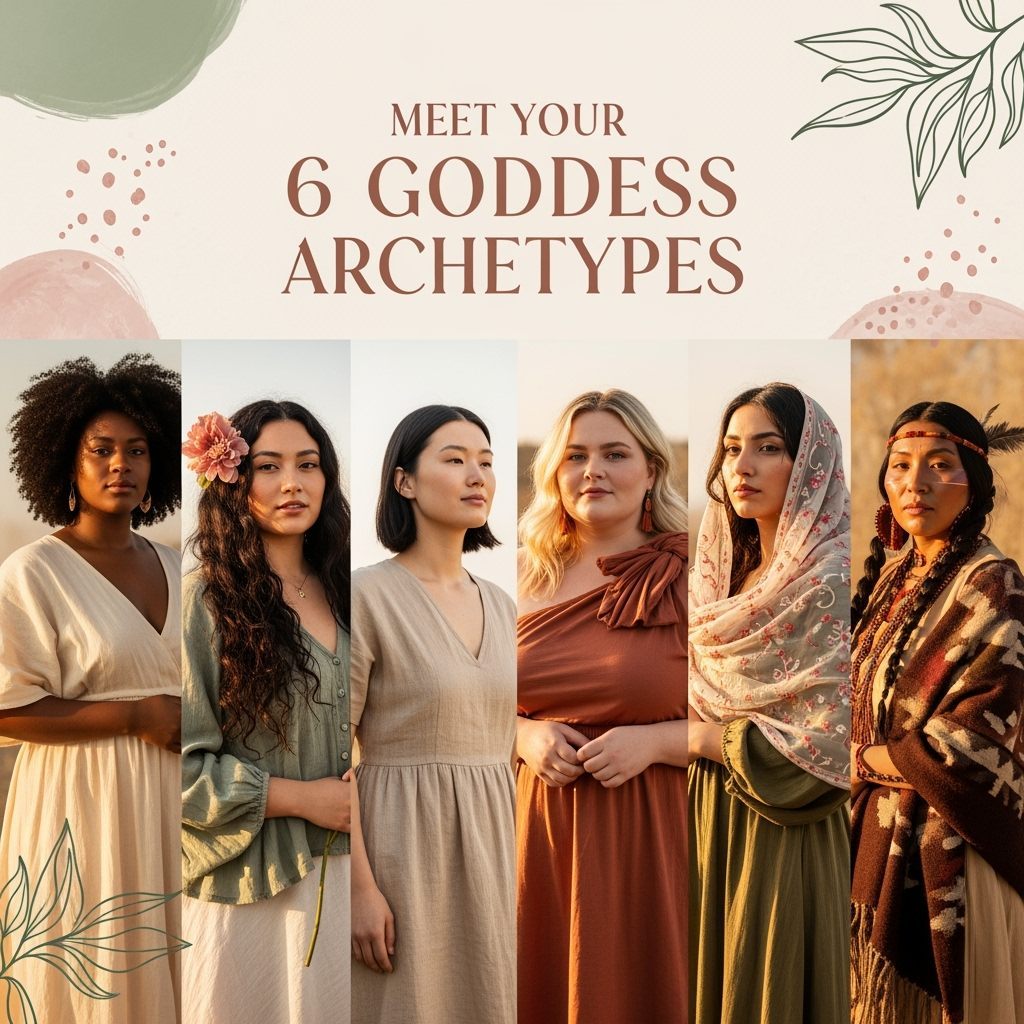
You might notice that some of the images used to represent these goddesses depict women of different nationalities, skin tones, and appearances. That is entirely intentional.
Most of these archetypes originate in Hindu tradition and are classically depicted as South Asian women — and that cultural heritage is sacred and deserves deep respect. But every single one of these energies has counterparts in other parts of the world. The fierce warrior protector, the earth mother, the sacred flame, the flowing creator, the radiant abundant woman, the primordial life force — these are not only Indian. They are human. They belong to every woman who has ever lived in a body on this earth.
When you picture Gaia, you might see a Black woman with her bare feet in the red soil of West Africa. When you picture Durga, you might see an Indigenous woman standing her ground on sacred land. When you picture Lakshmi, you might see a curvy Polynesian woman laughing freely in her own radiance. None of these images diminishes the Hindu goddesses — they expand them. Because archetypes, by definition, live in everyone.
What defines your goddess archetype is never her outer appearance, the culture she was named in, or the skin she was drawn with. It is the quality of energy she carries — and that energy is in you, regardless of where you were born, what you look like, or which tradition you were raised in.
You are already her. We're just remembering together.
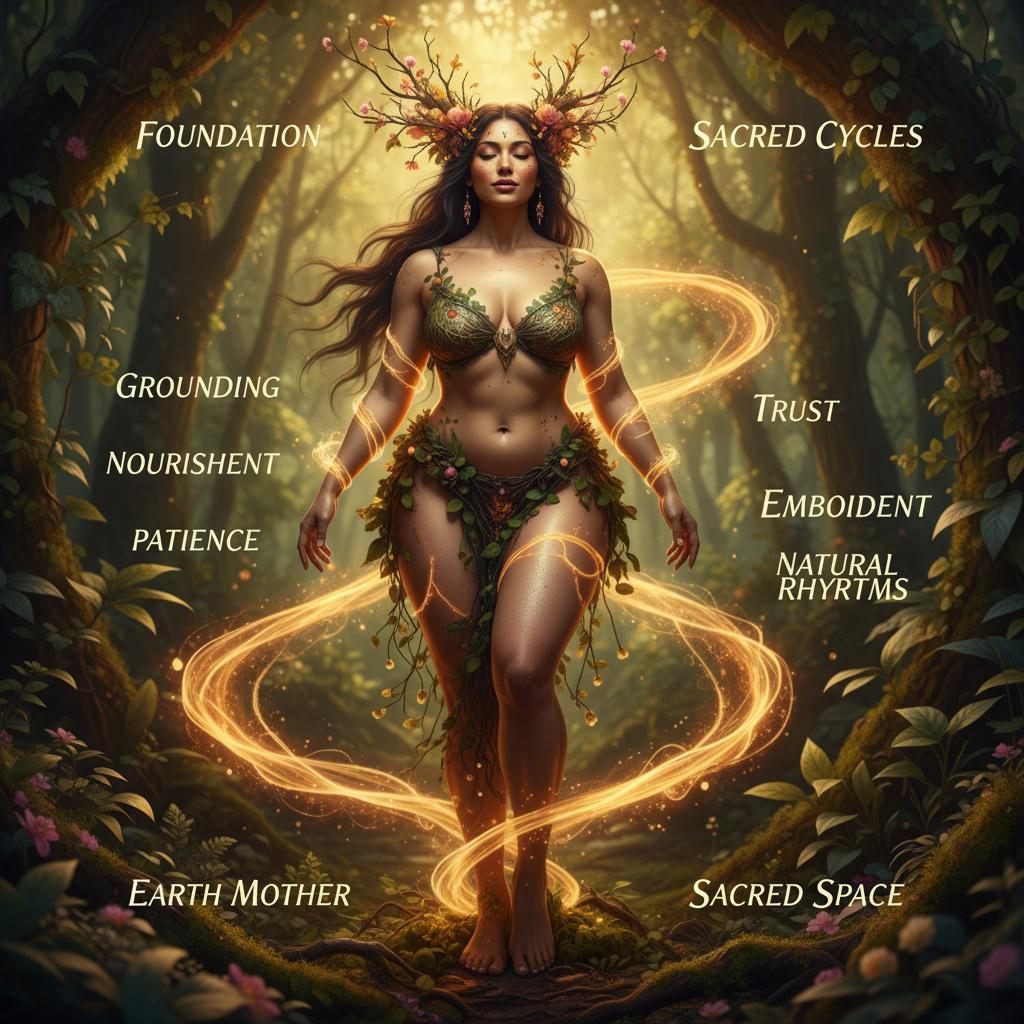
"I am the ground beneath your feet. I have been waiting for you to come home."
Origin: Ancient Greek — Gaia is the primordial earth goddess, one of the first beings to emerge at the dawn of creation. She is the literal ground of existence. She is also known as Pachamama in Andean tradition, Prithvi in Hindu cosmology, Nerthus among the Germanic peoples, and Spider Grandmother in various Native American traditions. Every culture that has lived close to the land has a version of her — she is universal because she is the earth itself.
What she looks like: Gaia appears as a woman who is deeply embodied — rooted, soft, unhurried. Earth tones, bare feet, hands that know how to tend things. Her power doesn't come from effort; it comes from presence. She smells like soil and rain and something ancient. Her hands are always warm.
Her energy in a woman's body: You're in your Gaia energy when you feel genuinely at home in your body. When you know what you need without having to think about it — rest, nourishment, time outside, solitude. When you can say "I need to sleep" without guilt. When a walk in nature genuinely restores you.
You might be in a Gaia deficit if: You're chronically exhausted and pushing through anyway. You eat on the run and haven't cooked a real meal for yourself in weeks. You feel disconnected from your body — like you're living from the neck up. You feel most anxious when you don't have control. You can't remember the last time you sat outside with no agenda.
Her gifts: Groundedness. Sustainability. Cyclical wisdom. The ability to care for yourself the way you'd care for a beloved garden. The knowledge that rest is not laziness — it is the necessary winter before spring.
Why we begin here: Before we can access higher spiritual energies, we need to be rooted. Spiritual work without a body foundation is like building a temple on sand. Gaia is the foundation on which everything else stands.
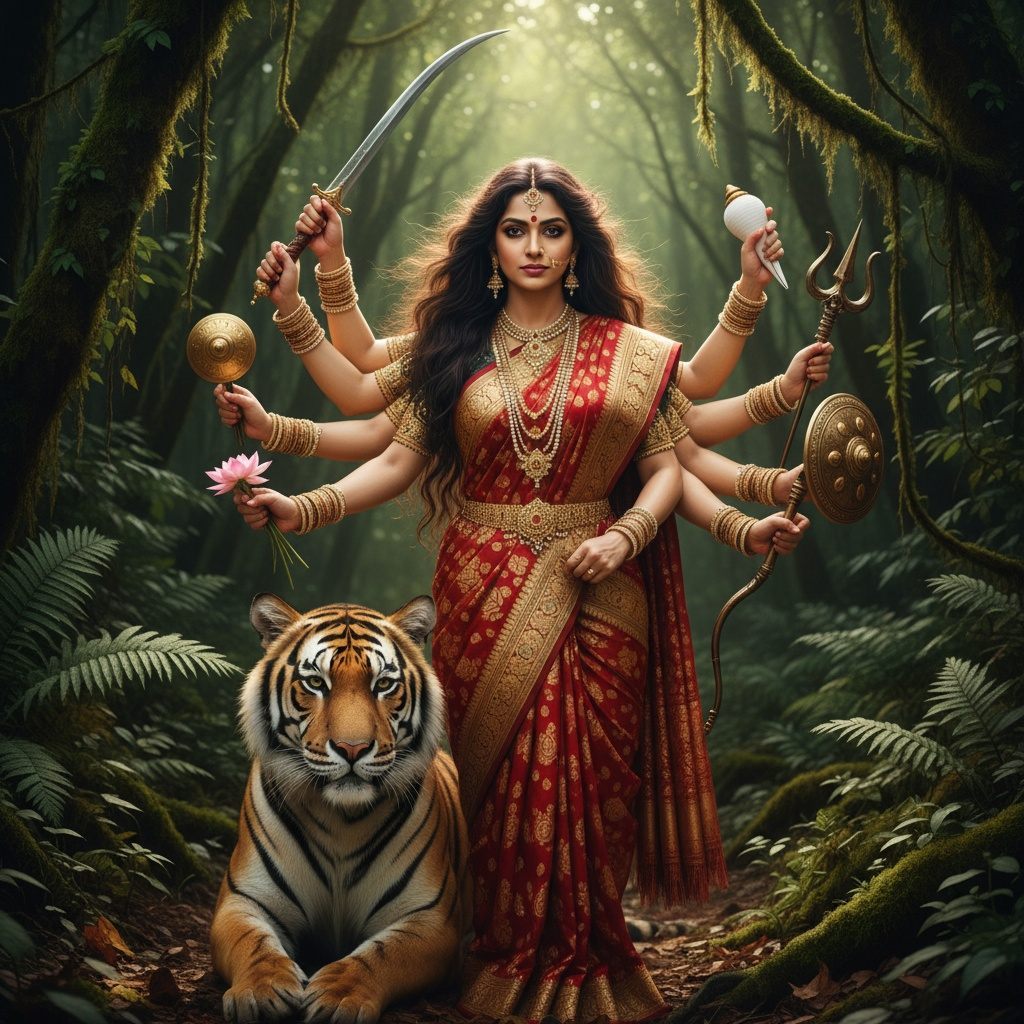
"You did not come here to be small. You came here to be fierce."
Origin: Hindu — Durga (her name means "the invincible") is one of the most beloved goddesses in the Hindu tradition. She arose because the gods themselves could not defeat a great demon — only the concentrated, unified power of all divine feminine energy could do it. She rides a lion or tiger, weapons in each hand, her face utterly calm in the midst of battle. She is also Sekhmet in ancient Egypt, Kali in her most fierce form, Athena in Greece, and the Morrigan in Celtic tradition.
What she looks like: Durga is unapologetically powerful. She stands tall. She doesn't shrink in doorways. Her gaze is direct and steady — she looks at you, not around you. Her power is not in her size but in her certainty. She doesn't apologise for taking up space.
Her energy in a woman's body: You're in your Durga energy when you can say no cleanly, without a five-paragraph explanation. When you feel anger rise and use it as information rather than drowning in it or stuffing it down. When you can have the hard conversation without either attacking or collapsing. When you know your own worth and don't need anyone to confirm it.
You might be in a Durga deficit if: You say yes when you mean no — constantly, habitually. You feel resentful but can't trace it to a specific boundary crossed, because you've never really had clear ones. You're afraid of your own anger. You'd describe yourself as "too sensitive" or "too much" — code for: your needs were taught to be silent.
Her gifts: Fierce self-love. Sacred anger used wisely. The ability to protect your energy without apology. Boundaries that are not walls but gates — selective, intentional, and deeply kind.
Why she comes second: Once we're grounded in our bodies (Gaia), we need the strength to protect what's sacred. Without Durga's container, the opening that comes in Month 3 can feel overwhelming or unsafe. She is the warrior who makes all the softer work possible.
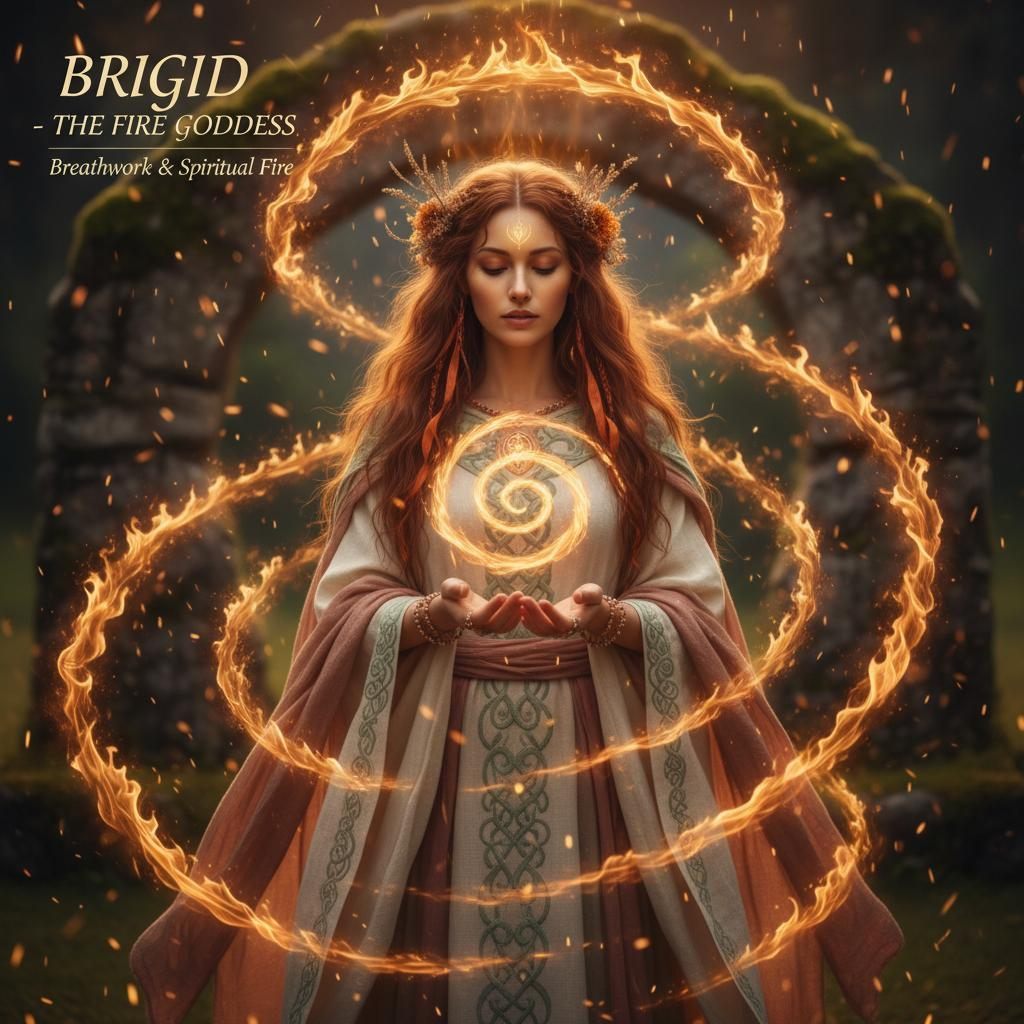
"I lit the fire in your belly long before you knew it was there."
Origin: Celtic — Brigid is goddess of the sacred flame, of poetry and inspiration, of healing wells and smithcraft — the creative fire that transforms raw material into something luminous. She is honoured at Imbolc, the first stirring of spring. Her flame burned perpetually at Kildare. She was so beloved that when Christianity arrived she became Saint Brigid. She appears as Vesta and Hestia, keepers of the sacred flame, and as Pele, the Hawaiian volcano goddess of creative destruction and renewal.
What she looks like: Brigid is luminous — a warmth you can feel before you can explain it. Her hair might be the colour of embers. She is often associated with transitional times — dawn, dusk, the moments between seasons. She tends to arrive quietly, but once she's in the room, something shifts.
Her energy in a woman's body: You're in your Brigid energy when your intuition is firing clearly and you're actually trusting it. When you wake with an idea and feel the excitement move through your whole body. When true words come from somewhere you didn't plan — the ones that change things. When you're genuinely curious about what's possible.
You might be in a Brigid deficit if: Your intuition speaks and you immediately talk yourself out of it. You feel creatively blocked or "dried up." You're depleted in a way sleep doesn't fix — like the pilot light has gone out. You feel your life is functional but not alive.
Her gifts: Awakened life-force energy. Intuitive clarity. Access to the invisible — guides, signs, the language of synchronicity. The ability to tend your inner fire so it burns sustainably rather than burning you out.
Why she comes third: With Gaia's grounding and Durga's strength as a container, it's now safe to open. Brigid's fire without those foundations can become volatile. But within the container we've built, her fire is purely transformative.
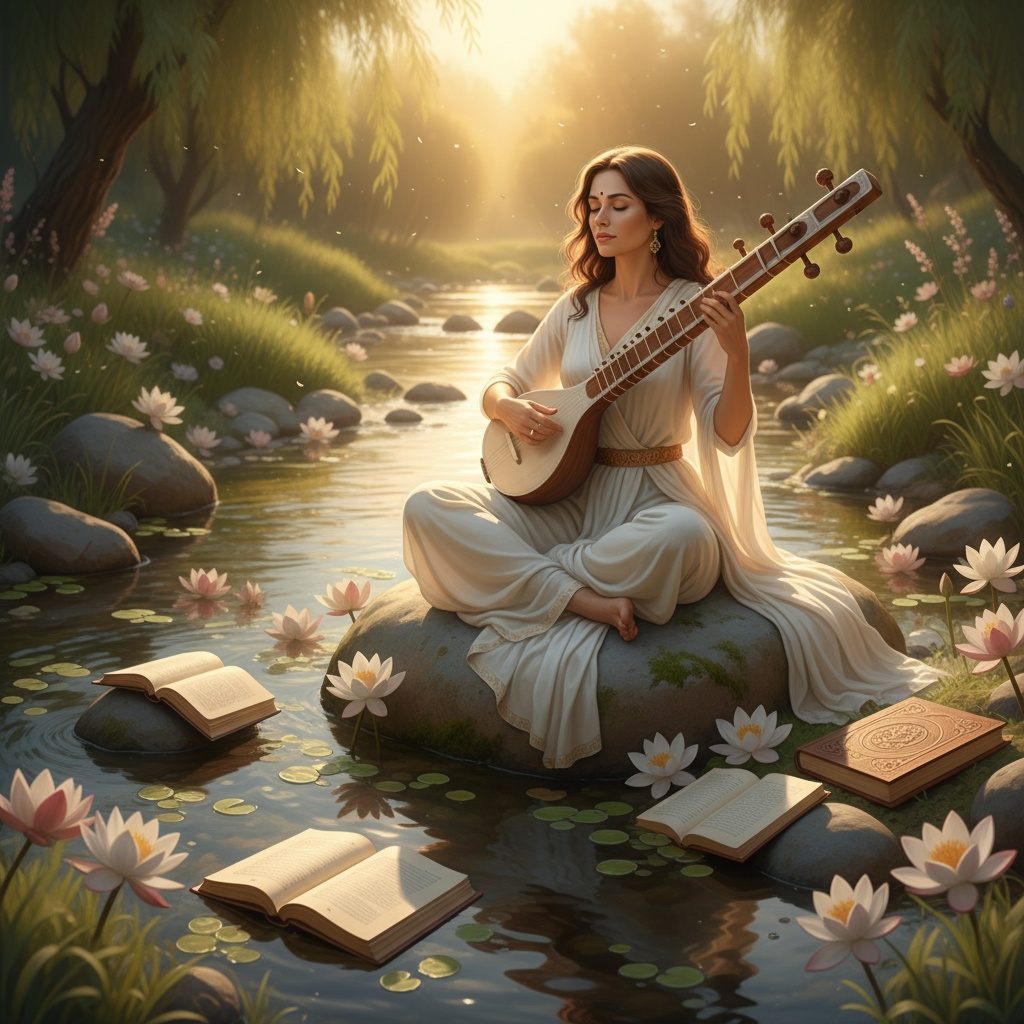
"Your voice is not too much. It is exactly what the world has been waiting for."
Origin: Hindu — Saraswati (her name means "the one who flows") is the goddess of knowledge, wisdom, music, and the creative arts. She sits on a white lotus, playing the veena, surrounded by flowing water — because knowledge, like water, finds its own path and cannot be forced. She appears as Seshat in ancient Egypt, as Cerridwen in Celtic tradition, keeper of the cauldron of inspiration, and as Calliope and the Muses in Greek myth.
What she looks like: Saraswati is effortless — she doesn't try, she flows. Often found with a pen, an instrument, a notebook. She might be the woman who speaks in a meeting and the room goes quiet — not because she's loud, but because what she said was true. She operates outside the tyranny of efficiency. She creates because it is natural to her, like breathing.
Her energy in a woman's body: You're in your Saraswati energy when you lose track of time creating. When you feel your authentic voice and it doesn't scare you. When you can hold a vision for your life that excites rather than overwhelms. When your creative work feels like self-expression rather than performance.
You might be in a Saraswati deficit if: You've been "meaning to start" that project for years. You're afraid to be seen — in a deep, quiet way, like something got switched off. You suppress your opinions in groups. You describe yourself as "not creative" (you are — this is a story, not a truth).
Her gifts: Authentic voice. Creative courage. The ability to channel your awakened energy into something real and lasting. A relationship with your own gifts that isn't dependent on external validation.
Why she comes fourth: You can't authentically create without the energy to fuel it (Brigid), the self-worth to believe it matters (Durga), or the groundedness to sustain it (Gaia). Saraswati is what happens when a woman who knows her worth and tends her fire asks: what shall I make?
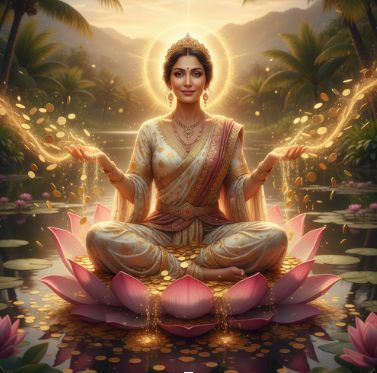
"You are not here to earn your abundance. You are here to receive what has always been yours."
Origin: Hindu — Lakshmi (the fortunate one) is the goddess of prosperity, beauty, abundance, and divine grace. She stands on a lotus, gold flowing from her hands — abundance not hoarded but freely given. In Hindu cosmology she is inseparable from right living: there is no lasting abundance without right relationship. She appears as Hathor in Egypt, as Aphrodite in her original form — a goddess of sacred sexuality and the creative power of the feminine — and as Freya in Norse tradition.
What she looks like: Lakshmi is radiant — she takes up space with joy rather than effort. She is comfortable in her own beauty, not because she thinks she's perfect, but because she has made peace with the body and face she's been given. She is genuinely, freely generous, because she operates from a deep knowing that there is enough.
Her energy in a woman's body: You're in your Lakshmi energy when you can receive a compliment without deflecting it. When you feel genuinely beautiful — because you are present, alive, in your body. When you can talk about money, desire, or pleasure without shame. When you can ask for what you want without apologising for wanting it.
You might be in a Lakshmi deficit if: You feel guilty spending money on yourself. You believe abundance is for other people. You carry shame around your body or your desires. You struggle to receive — gifts, compliments, help, love. You feel that no matter what you achieve, it's never quite enough.
Her gifts: Embodied abundance. Sacred sexuality as a life force, not a source of shame. Magnetic presence. The capacity to receive love. The knowing that beauty, pleasure, and prosperity are not frivolous — they are divine.
Why she comes fifth: You cannot truly embody abundance while still carrying the wounds the earlier goddesses helped you work through. Lakshmi is the flowering of all that work.
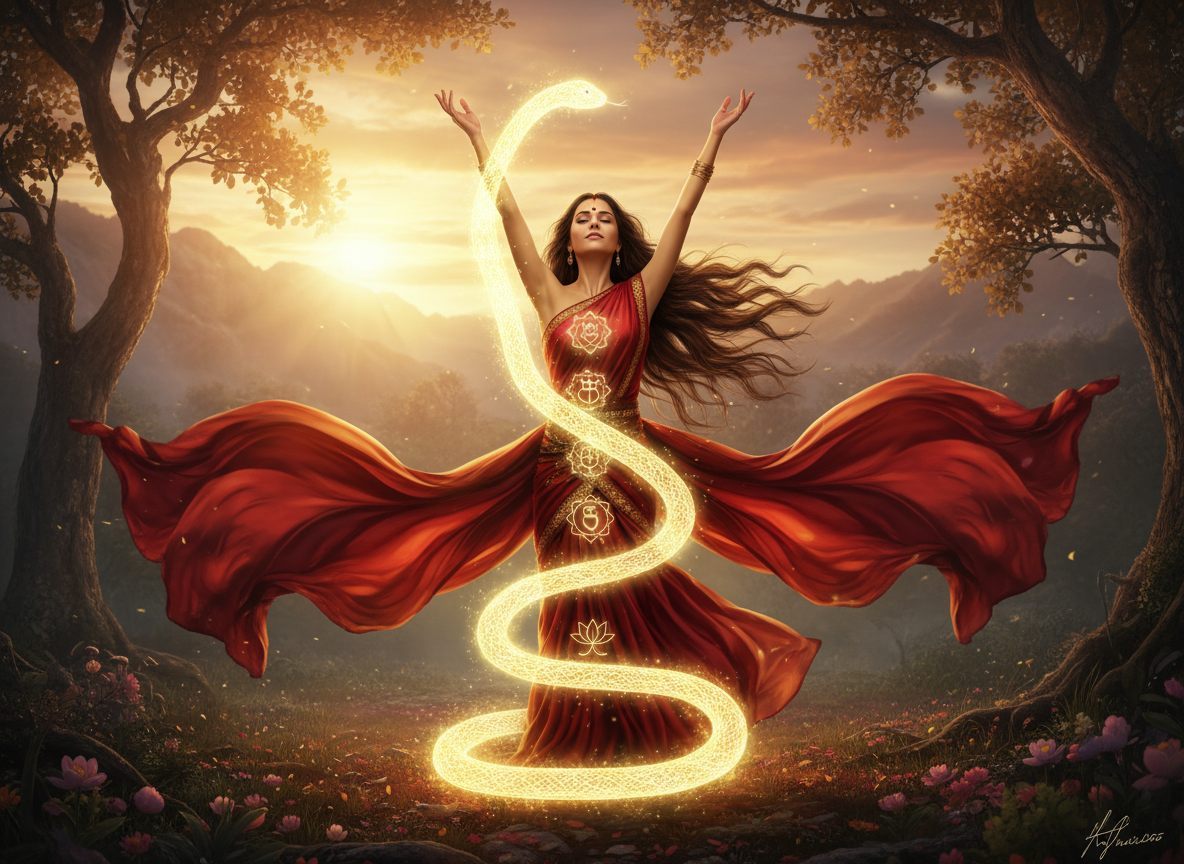
"I am not one goddess. I am the energy that moves through all of them. I am what you have become."
Origin: Hindu — Shakti (her name simply means "power") is not a goddess in the conventional sense. She is the primordial creative force of the universe — the divine feminine principle from which all existence arises and into which it returns. She is the kundalini energy coiled at the base of the spine, waiting to rise. She lives in every other goddess — Gaia is her earthing, Durga her strength, Brigid her fire, Saraswati her voice, Lakshmi her radiance. She appears as Isis in Egypt, as Inanna in ancient Sumeria, and as Oya in Yoruba tradition.
What she looks like: Shakti has no fixed form, because she is the energy that moves through all forms. By Month 6, you recognise her because she looks like you — the version of you that has done six months of sacred work. She carries her whole story with neither shame nor attachment. She has learned to sustain her practice not through willpower but through love.
Her energy in a woman's body: You're in your Shakti energy when your spiritual practice is woven through ordinary life rather than separate from it. When you can hold other women's growth without diminishing your own. When you can be in your body, your creativity, your abundance, and your power simultaneously. When you feel called to offer something of yourself to the world from genuine overflow, not depletion.
You might be in a Shakti deficit if: You've learned many spiritual things but nothing has really changed. You have breakthroughs but can't sustain them. You feel like you keep starting over. You know who you want to be but can't close the gap between that vision and your daily life.
Her gifts: Integration. Sustainability. The transformation of temporary inspiration into permanent embodiment. The lived knowing that you are not on a journey toward power — you are the power. You always were.
Why she comes last: Because she is the completion. She is what happens when a woman has done the real work — not perfectly, not without stumbling, but genuinely, over time. She doesn't arrive as a destination. She arrives as a recognition.
Read back through them slowly. Which one made you feel seen? Which one made something in your chest soften or tighten? Which one made you think yes, I need that — and which made you think I'm not ready for that yet?
That instinctive response is information. It's the beginning of your relationship with her. In our journey together we move through all six — in order, for reasons that matter — but the one you feel most drawn to right now is telling you something about where you are and what wants to change.
She has been with you longer than you know. This is simply the moment you're finally paying attention.
Whichever goddess is calling you, there's a gentle way to begin — and no wrong place to start. You can meet a single goddess on her own, a four-module journey at your own pace, or walk all six through the full six-month collection. And whenever you'd like company on the path, the Supported Sisterhood is there — a circle of women walking beside you. No pressure, no rush. Begin wherever feels true.
You are already her. We're just remembering together. ✦
With love,
Juanelle