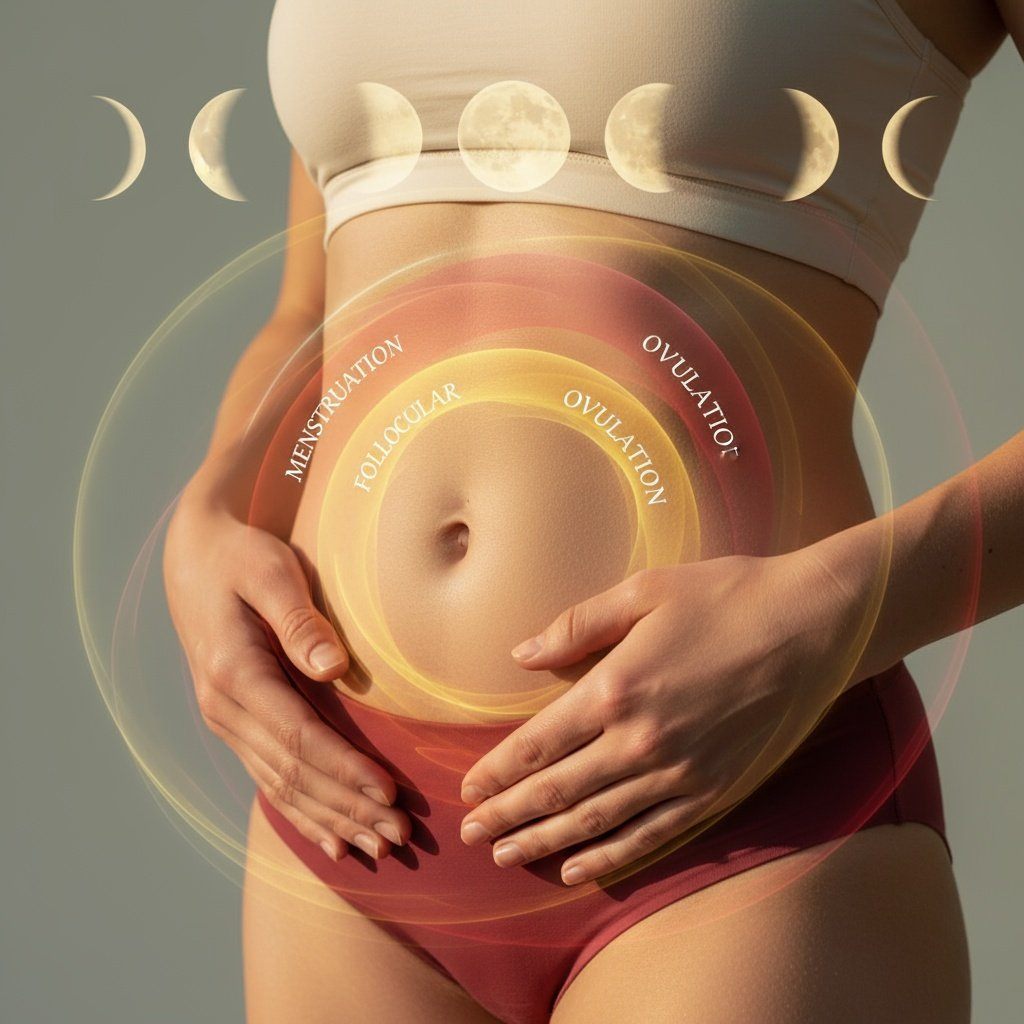
If you've ever sat down to do a moon ritual, looked up what you're "supposed" to be doing, and ended up more confused than when you started — you are not alone, and you are not doing it wrong.
Most of the confusion comes from one simple thing nobody explains: there are two different moon systems being taught at the same time. Once you can see them clearly, it all falls into place. So let me untangle it honestly — including the question I'm asked most: does the moon really affect us, or is it just lovely poetry? Let's look at the tradition and the actual science, and then I'll show you how to find the rhythm that fits your own body.
Two systems — more aligned than they first appear
You'll hear two frameworks taught, and they can seem to contradict each other.
The traditional system — rooted in Wiccan and pagan practice — works with the moon's light as symbol. The New Moon is for new beginnings, planting seeds of intention. The Full Moon is the most powerful phase of the whole cycle — peak energy, celebration, ritual, and also a time to release what no longer serves. The waning moon is for inward reflection and integration.
The energy-based system maps the moon onto your body's natural energy flow. The New Moon is lowest energy — rest and receive. The waxing moon is energy building — set intentions, take action. The Full Moon is peak power — celebrate and manifest. The waning moon is release, as energy naturally contracts.
Here's what most teachers never tell you: these two are more aligned than they look. Both honour the Full Moon as the most powerful, celebratory phase. The only real difference is where releasing sits — the traditional system places it at the Full Moon, alongside celebration; the energy-based system places it at the waning moon, when energy is already falling away. Both are internally coherent. Neither is wrong.
And that Full Moon peak isn't a modern invention. Across pre-Christian Europe, Hindu, Indigenous, African and Polynesian traditions, the Full Moon was a time of gathering, dancing, bonfires and fertility ritual — from the Hindu festivals of Holi and Sharad Purnima to countless harvest-moon celebrations. The sense that the Full Moon makes you feel alive, magnetic and drawn to others is genuinely cross-cultural and ancient.
But does the moon actually affect us? Let's be honest.
This is the question I'm asked most, often with a real example: "What about the nurses and police who swear the full moon makes people wild?" It's a fair question, and it deserves an honest answer rather than a pretty one.
On the dramatic stuff — crime, violence, psychiatric crises — the evidence may surprise you. When researchers pooled 37 separate studies into one large review, they found no real link between the full moon and crime, psychiatric admissions, suicides, or crisis-line calls; the moon explained less than one percent of the variation. Later large studies agreed — one looked at more than twenty-three thousand people and found no lunar effect on crime at all.
So why do so many professionals feel it's real? Because of a very human glitch called confirmation bias. On a chaotic full-moon night, everyone says "must be the moon," and we remember it. On the equally chaotic nights when the moon is new or half, nobody blames the moon, and we quietly forget. The wild nights get counted; the calm ones don't. As woven into our language as it is — the word lunatic comes from luna — the "full moon makes people crazy" idea simply isn't supported by the data.
And yet — this is the part I love — the moon does affect us, in subtler and beautifully documented ways:
Your sleep. This one is real and repeatedly shown. A 2021 study tracked sleep in both a rural Indigenous community in Argentina and university students in Seattle — and both groups fell asleep later and slept less in the few nights before the full moon, even where city lights all but drown the moon out. Our sleep genuinely shifts across the lunar cycle.
Your cycle. A 2021 study following women's menstrual records over many years found that some women's cycles intermittently synchronise with the moon's light and gravitational pull — most often in cycles longer than 27 days, in women under 35, and more in winter. It isn't every woman and it isn't all the time — but for some, in some seasons of life, the sync is real and measurable.
The earth itself. The old New Moon planting wisdom has roots in the soil: many biodynamic farmers still plant by the moon, working with the idea that the same gravitational pull that moves the ocean tides also draws moisture up through the earth as the moon waxes. The symbolic language of "planting intentions at the New Moon" grew directly out of that real agricultural rhythm.
So here is the honest, grounded truth: the moon won't make you lose your mind — but it really can move your sleep, your cycle, and the water in your body and the soil beneath your feet. The felt experience so many women describe isn't fantasy; it's a real, subtle influence. What matters most isn't whether the moon controls you — it's that tuning into a cycle, any cycle, returns you to yourself.
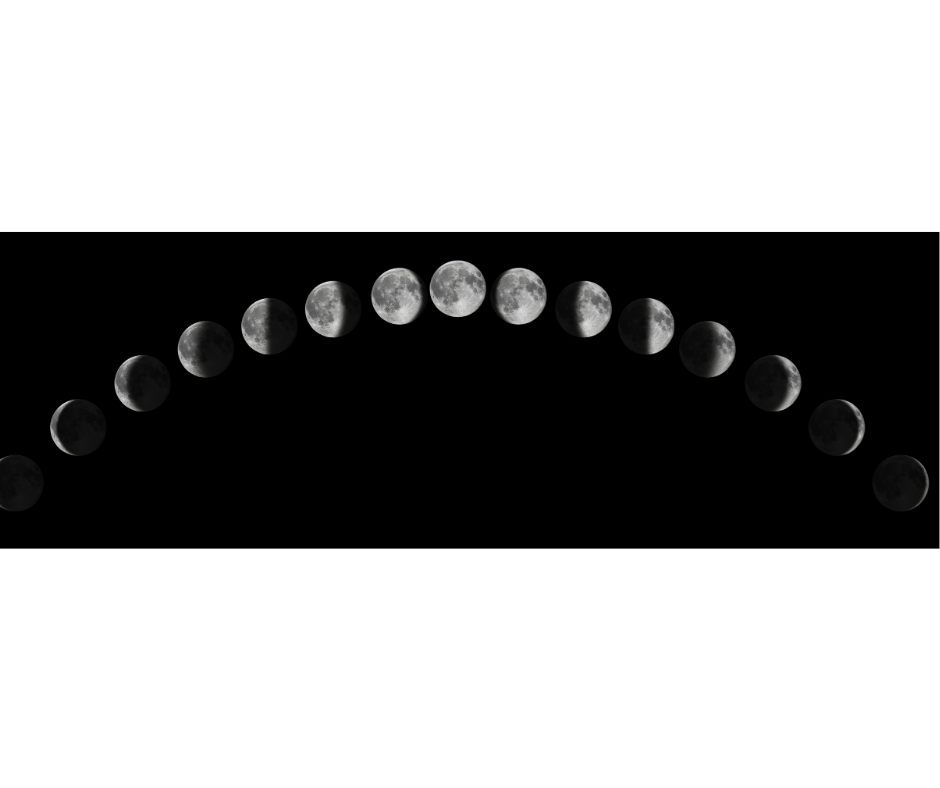
Your inner seasons
Here's the compass I trust most: your own body. Whether or not your cycle lines up with the moon in the sky, your menstrual cycle moves through four inner seasons every single month — and learning to feel them changes everything.
Inner Winter — your bleed. Rest, go inward, receive. This is your lowest energy and your invitation to do less.
Inner Spring — energy rebuilding after your bleed. New ideas stirring, optimism returning, a sense of opening.
Inner Summer — ovulation. Peak power, confidence, magnetism. The time to take action, have the conversation, and let yourself shine.
Inner Autumn — the premenstrual phase. Energy turning inward, the inner critic often louder, a natural time to complete, edit, simplify, and prepare to rest.
And if your cycle is irregular, you're on contraception, or you don't bleed at all — through perimenopause, menopause, or any reason — you are still cycling energetically. The seasons still move through you; you simply learn to read them by feel rather than by blood. A tulip opening and closing. Breath going out and coming in.
White Moon, Red Moon
Now it gets personal — because your cycle may or may not line up with the moon overhead.
If your bleed arrives around the New Moon, you're in the White Moon cycle — traditionally the Mother cycle. Your body's natural rest aligns with the moon's dark, quiet phase, and you ovulate near the Full Moon — peak energy meeting peak moon. Both systems tend to feel fairly natural to you.
If your bleed arrives around the Full Moon, you're in the Red Moon cycle — traditionally the Wise Woman, or Crone, cycle. Here's the honest part: neither system maps neatly onto your body, because you're ovulating at the New Moon (full of power, wanting to shine, when the world says rest) and bleeding at the Full Moon (needing rest, when the world is celebrating). That's not a problem to fix — it's powerful self-knowledge, and it often comes with deep intuitive insight. Neither cycle is more spiritual than the other. Both are sacred.
How this journey uses the moon
One thing about how the programme is built: for the first three months, we follow the traditional system as a gentle learning scaffold — New Moon for intentions, Full Moon as the celebratory peak with release woven in, waning moon for integration. It gives you something clear to anchor to while you're learning to track your cycle, often for the very first time. There are short moon rituals for every phase, all six months long.
Then, by Month 4 — once you have real self-knowledge — you get to consciously choose which system actually serves your body. We go deep into all of it in Chapter 16. That's the moment you stop following the moon by rule and start dancing with her.
For now, there's nothing to get right. Simply notice: where are you in your cycle? Where is the moon? No analysis needed — just awareness. That noticing is the whole practice.
Want to go deeper?
This inner-season work is what we explore together across the six-month journey — and in depth in Module 16, once you've spent months listening to your own body. You can begin with a single goddess at your own pace, starting with the four-module Gaia foundation, or walk all six through the full collection — and whenever you'd like company on the path, the Supported Sisterhood is there beside you.
White Moon or Red Moon sister? Either way — you are exactly where you're meant to be. ✦
With love,
Juanelle